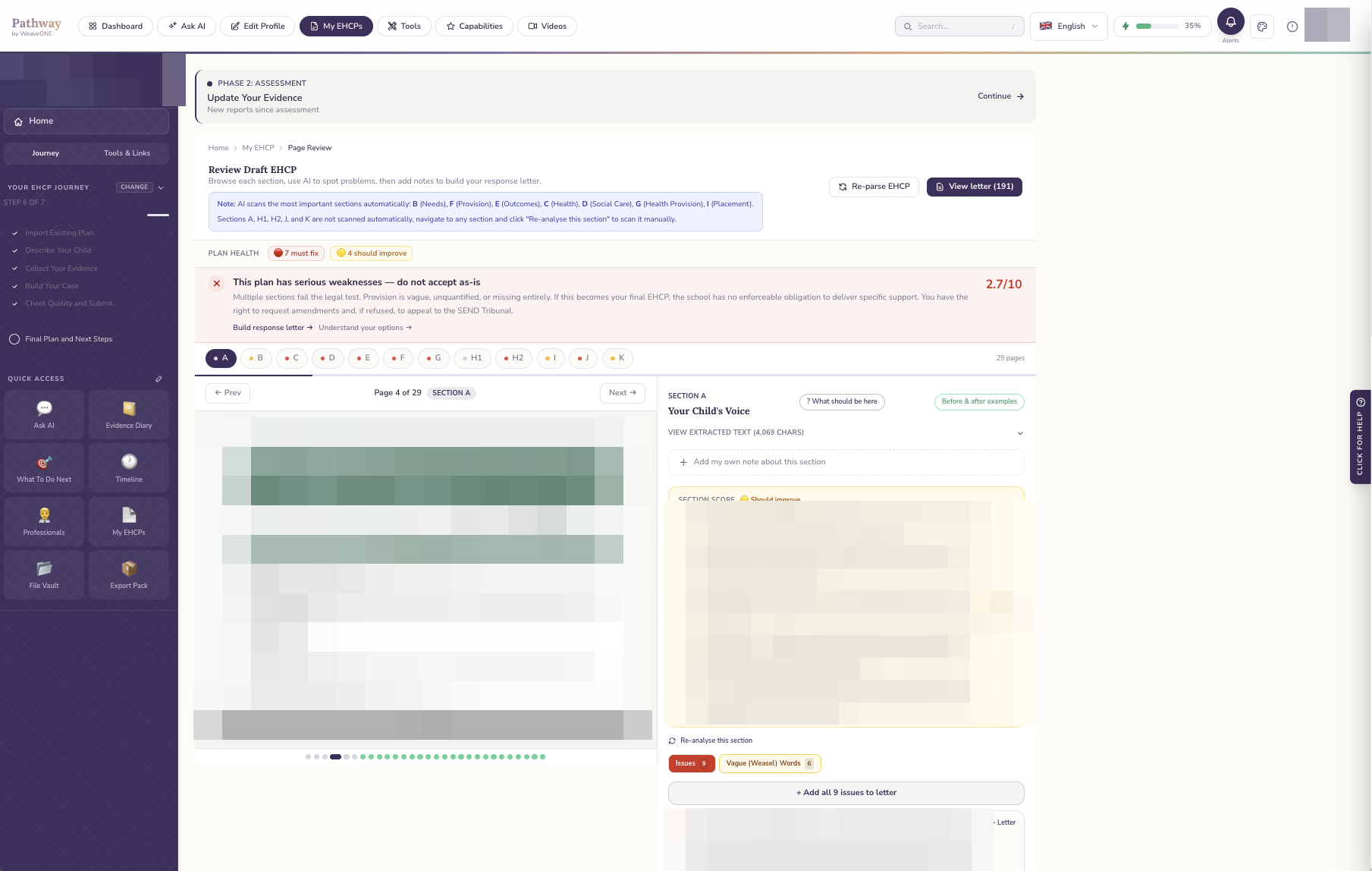
Triage the morning in one screen.
Your Day — an AI agent has already sorted the morning
Overnight, the AI agent reads your queue and writes the morning overview: what's urgent, what's important, and the order to take it in — "start with Mason's family, then the thirteen overdue reviews, beginning with the one now 234 days behind." Reviews, parent messages, cover and safeguarding actions, prioritised for you instead of by you.
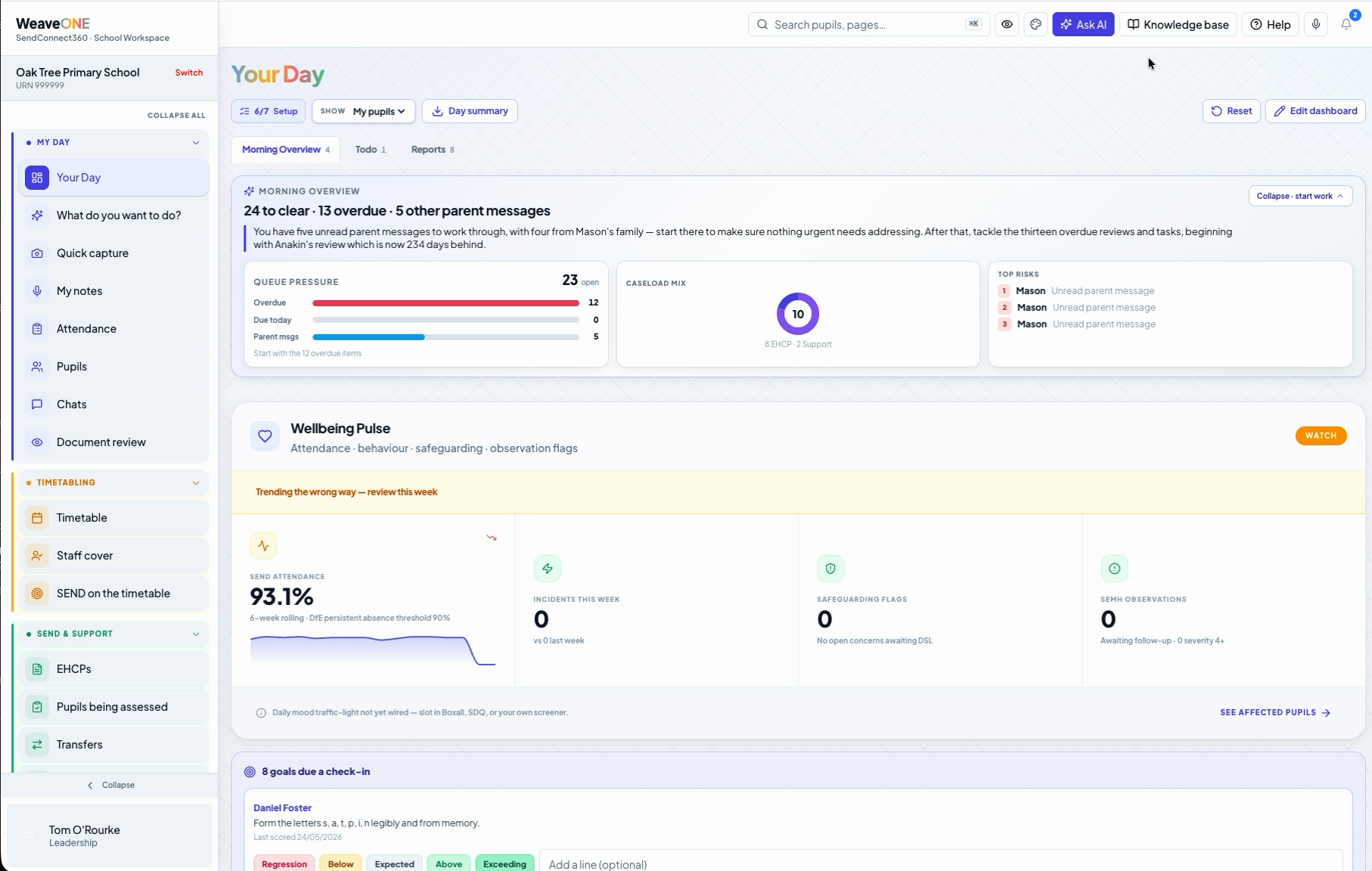
The parent message, answered properly
"Mason didn't sleep well — please look after him today." Parents reach you the way they actually message — native WhatsApp, SMS, email or the parent portal — it all lands in one place, the warm reply is drafted for you to send, and the exchange lives on the pupil's record, so the afternoon staff know what the morning staff knew.
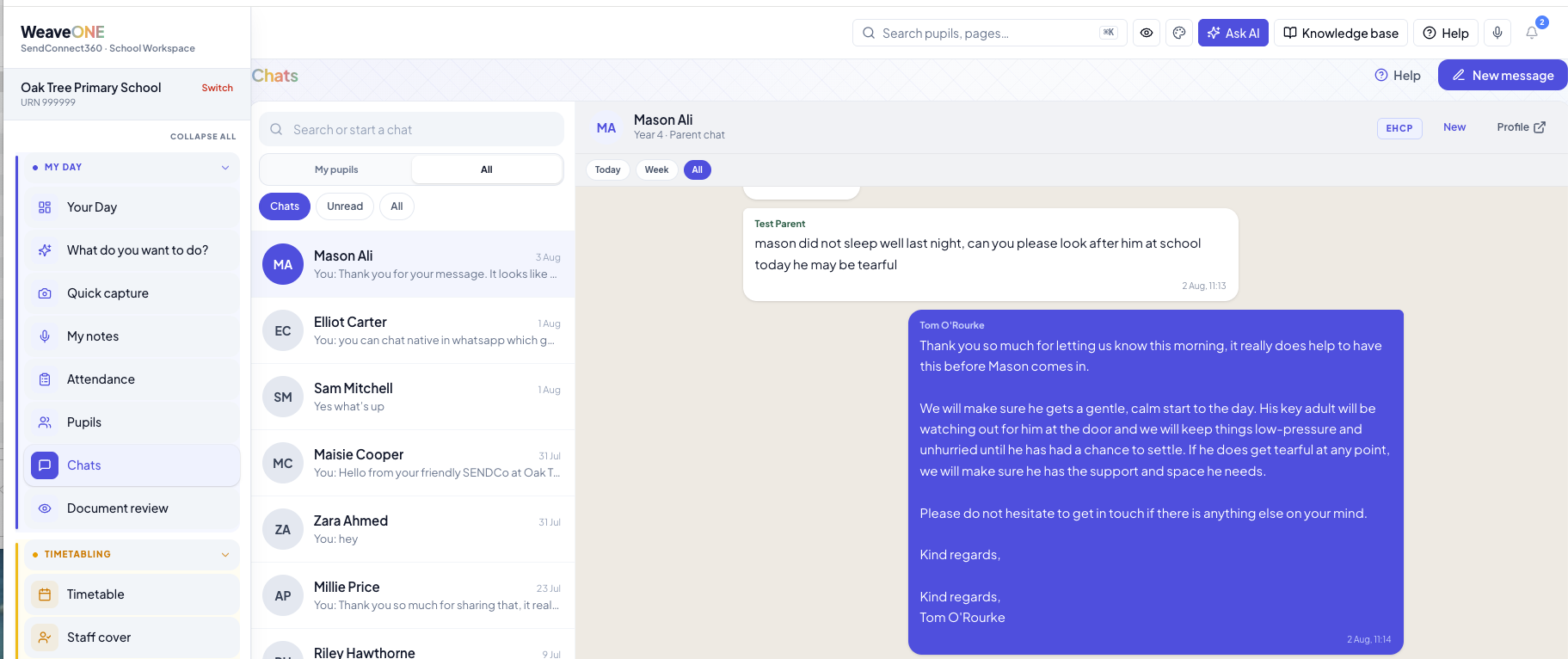
Every pupil, every tier, one register.
Every child in the school — with SEND depth where it's needed
The whole school in one register, not just the SEND cohort — goals, attendance, adjustments, teachers and funding side by side. As a child's need rises through SEN Monitoring, SEN Support and EHCP, the record unlocks the advanced SEND provision tools and AI capabilities around them: plans, provision mapping, statutory tracking, drafted paperwork. One system for the whole school; the depth arrives exactly where it's needed.
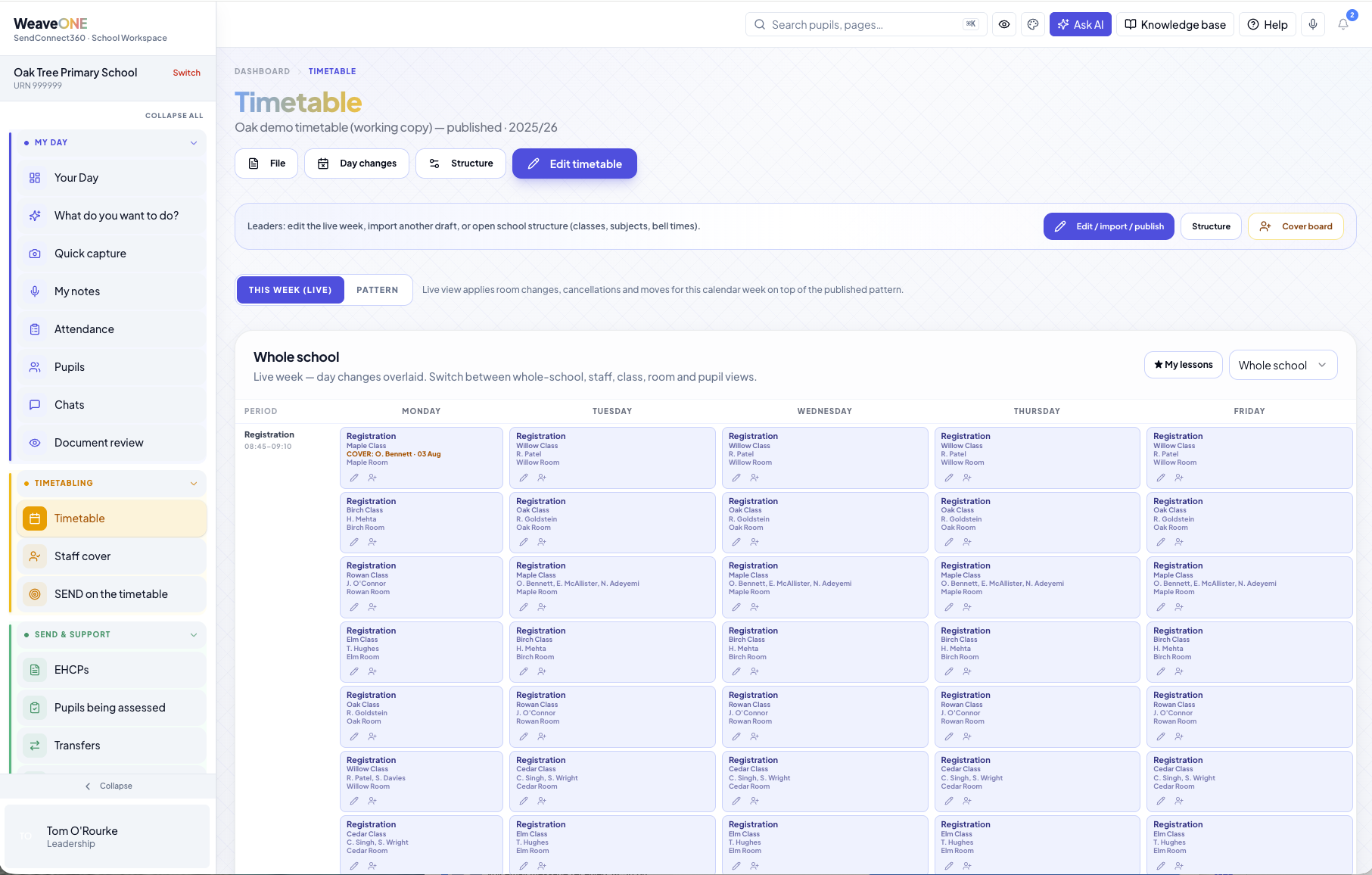
One live timetable, provision included
The whole school's week with day changes overlaid — cover shows in red on the day it happens. Whole-school, staff, class, room and pupil views — and support provision is scheduled into the week, not tracked in a separate document.
Plans and paperwork, in minutes not evenings.
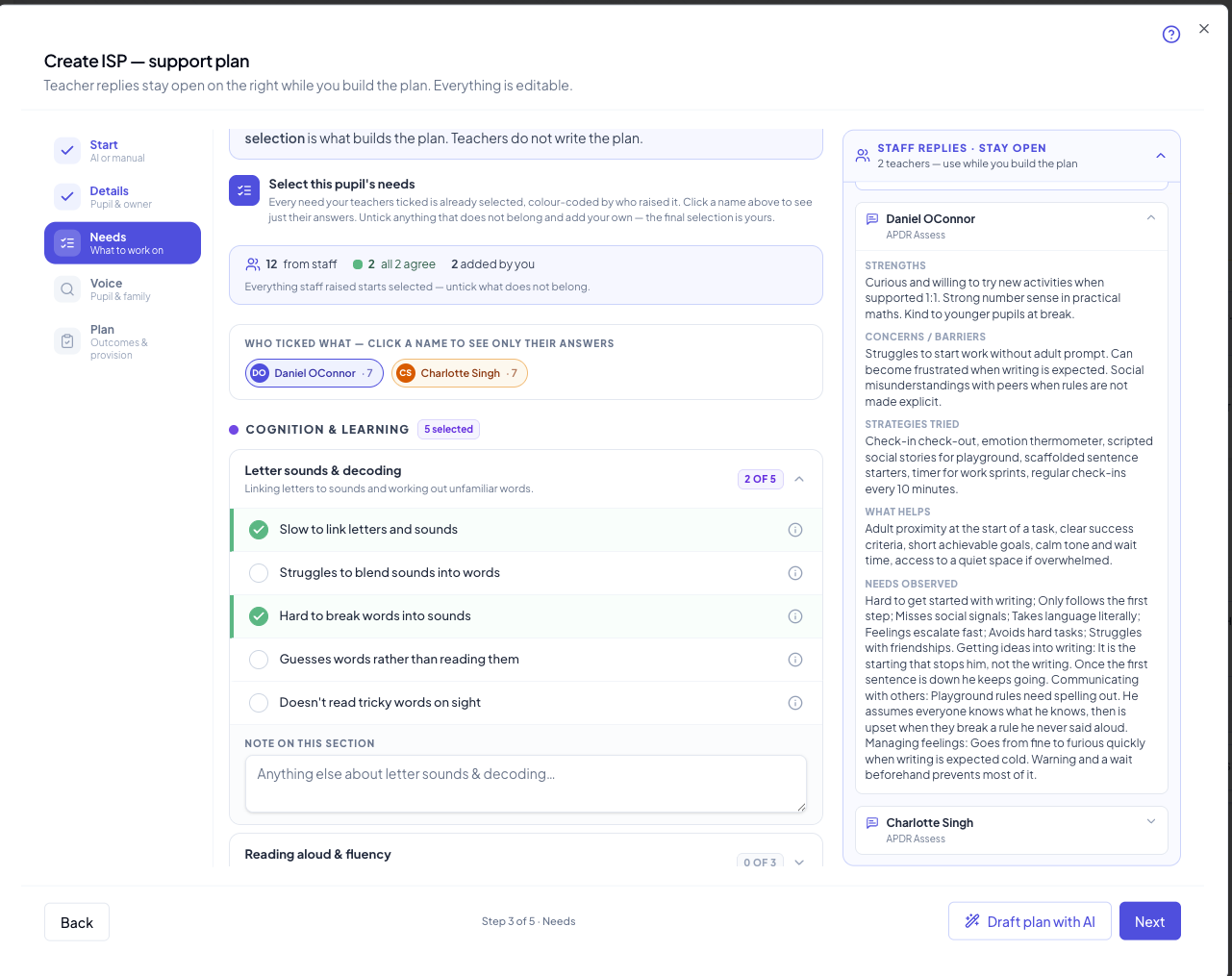
Support plans built from what staff actually see
Teachers answer a short APDR form; their strengths, barriers and "what helps" stay open beside you while you build the plan. Every need staff raised arrives pre-selected — untick what doesn't belong, then let AI draft outcomes for your review.
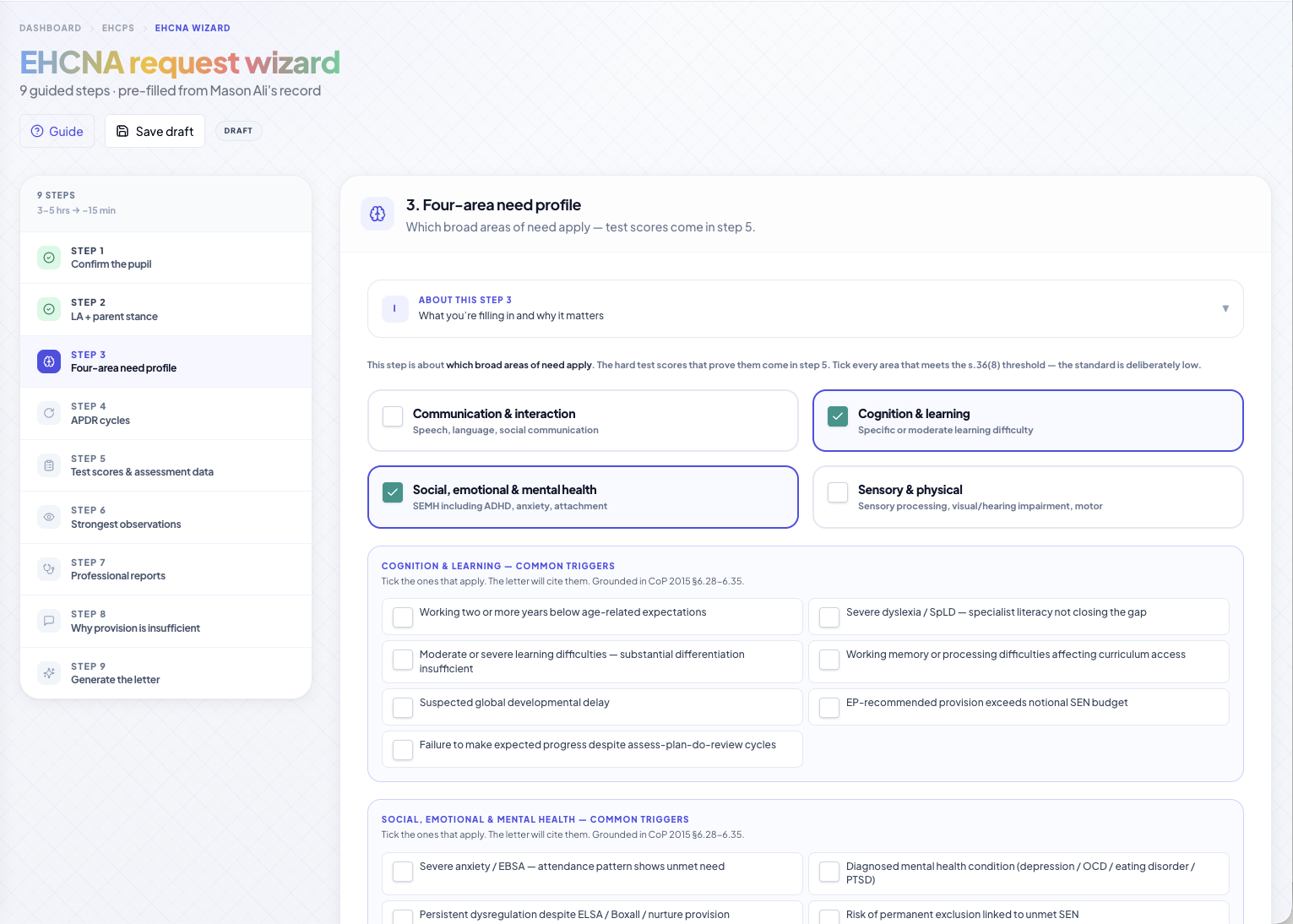
EHC needs assessment requests, guided
Nine steps, pre-filled from the pupil's record. The four-area need profile offers the common triggers — each grounded in the SEND Code of Practice §6.28–6.35 — and the finished letter cites what you ticked.
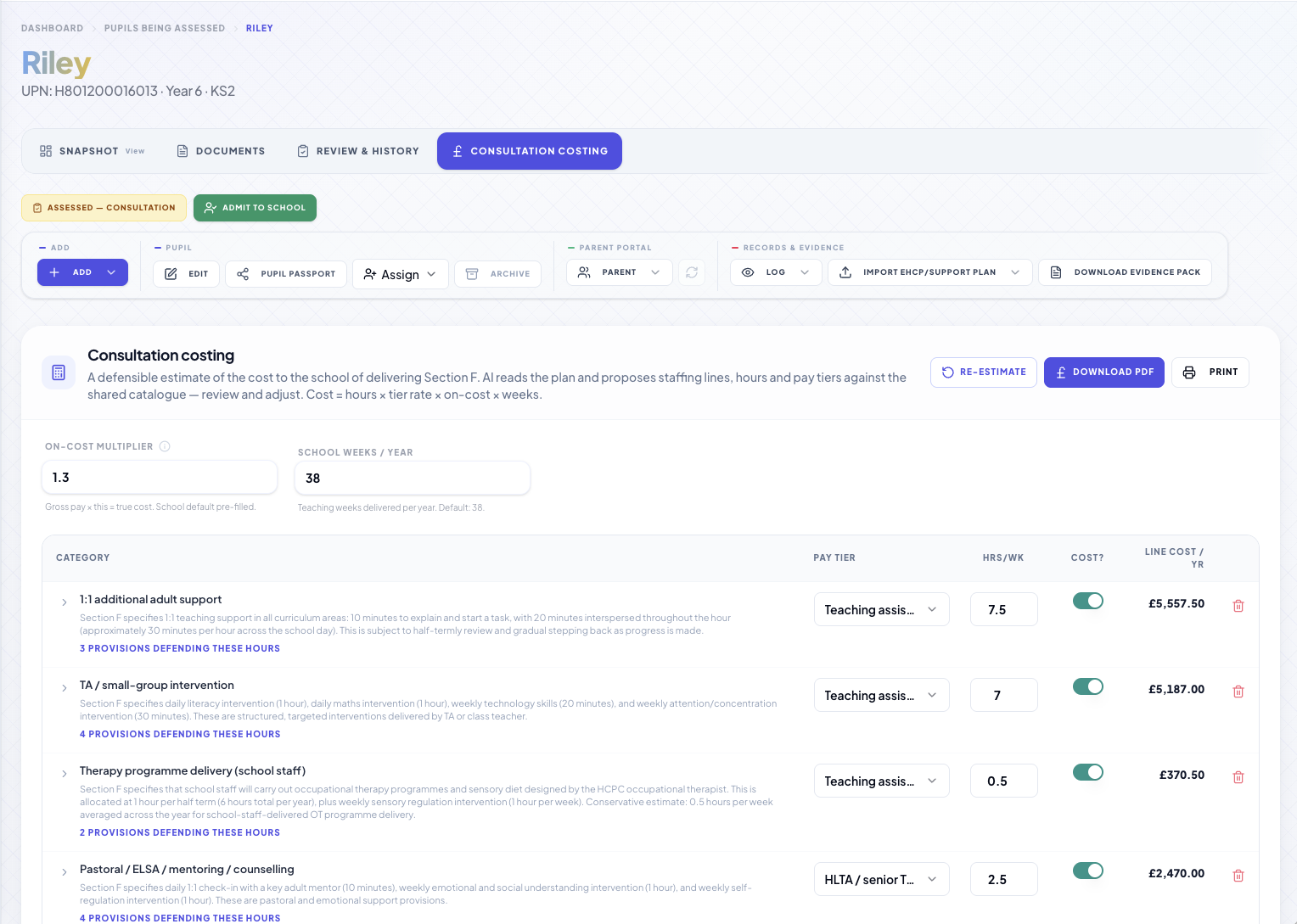
Consultation costing — a defensible answer to the LA
When the local authority consults you on a placement, our secure AI — built on SEND law, with identifying details scrubbed first — reads the plan in under a minute and proposes staffing lines, hours and pay tiers against your own catalogue. Cost = hours × tier rate × on-cost × weeks; every line shows the Section F provisions defending it. Review, adjust, download the PDF.
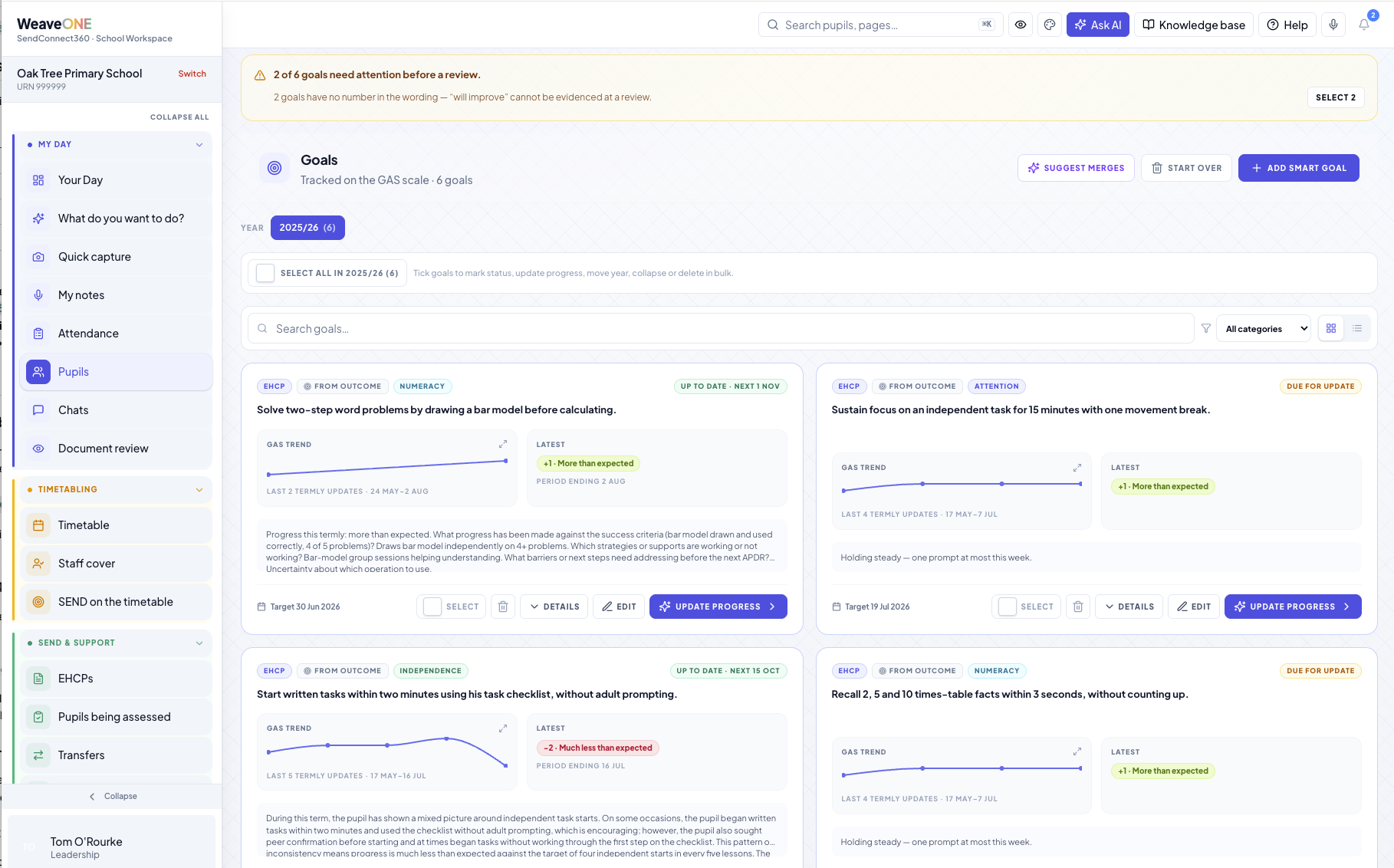
Goals tracked on the GAS scale — and policed
Every goal carries its termly GAS trend, so progress is a chart, not an adjective. Weak wording gets flagged before a review does: "2 goals have no number — 'will improve' cannot be evidenced."
Documents, notes and the admin between lessons.
Attach a letter — the risks get flagged
A transfer letter attached to a note comes back analysed: a severe allergy needing an EpiPen plan before day one, an EHCP statutory duty transferring with the pupil, a missing parental contact — each with a suggested action.
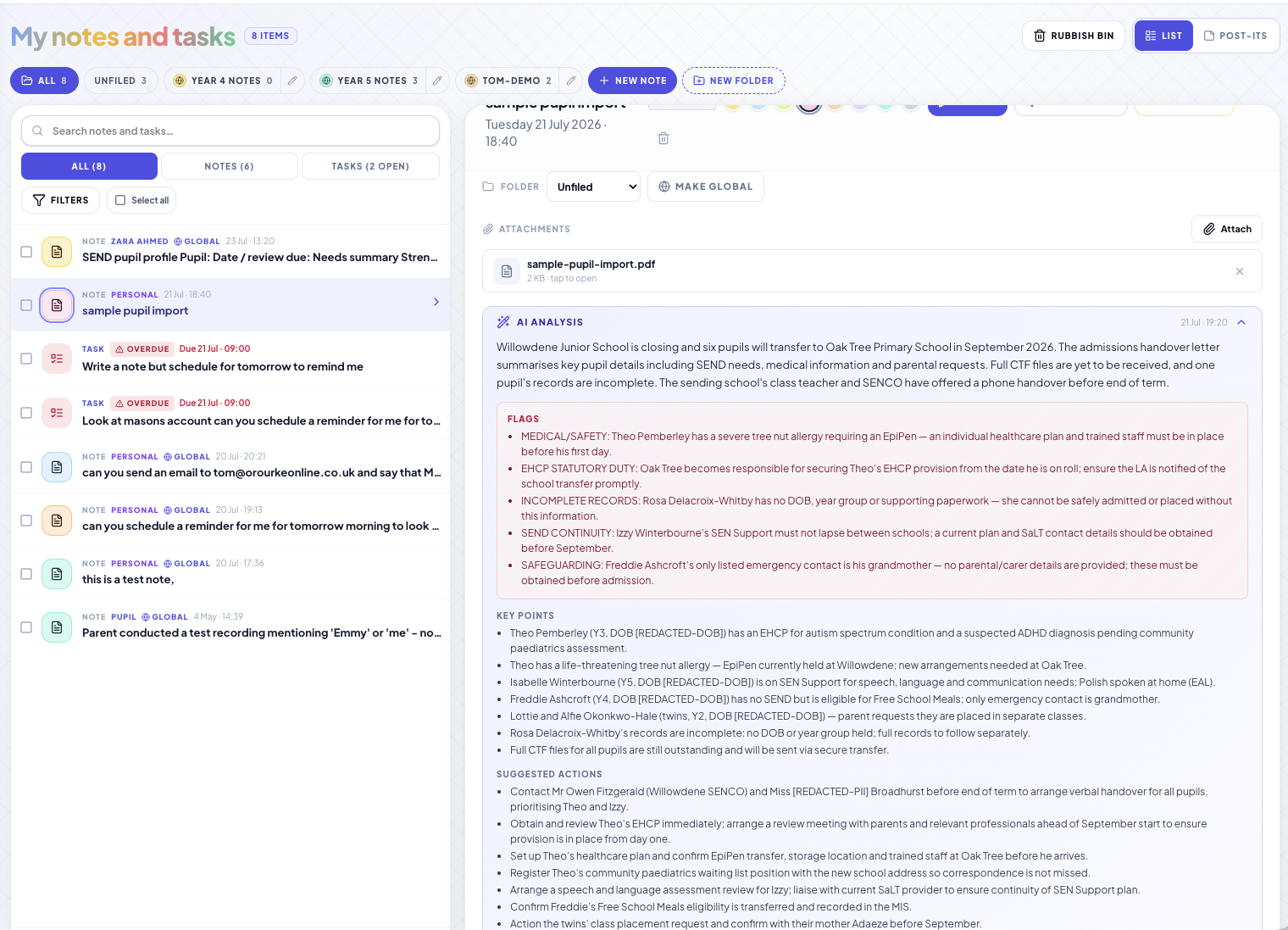
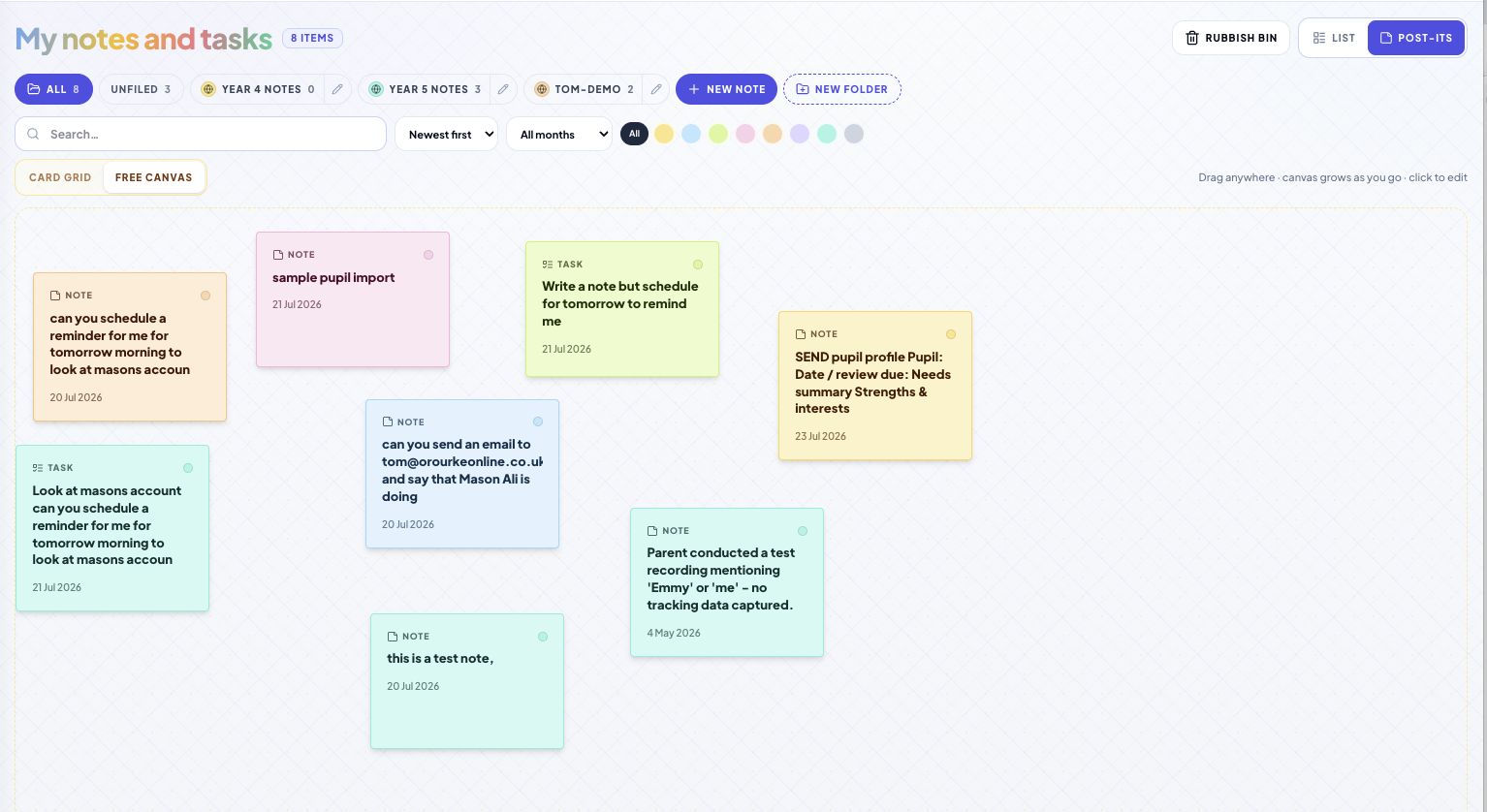
Notes and tasks, the way you actually think
Post-it canvas or list view, folders per year group, tasks with reminders — capture the corridor conversation in ten seconds and let it resurface when it matters.
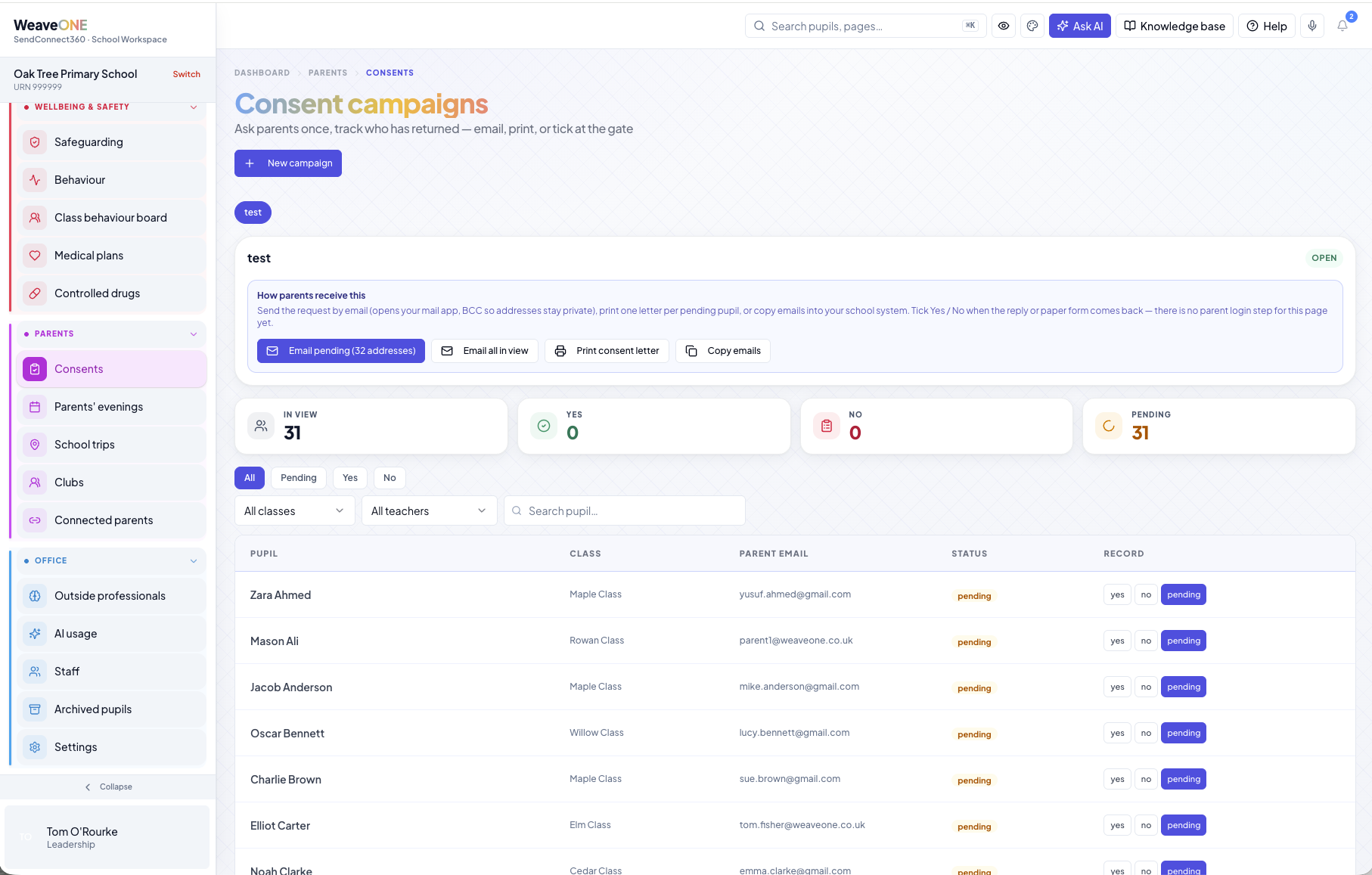
Consent campaigns without the chasing
One campaign, thirty-one families: email the pending list in one click, print letters for the paper households, tick responses at the gate. Yes, no and pending stay live — no more counting reply slips.
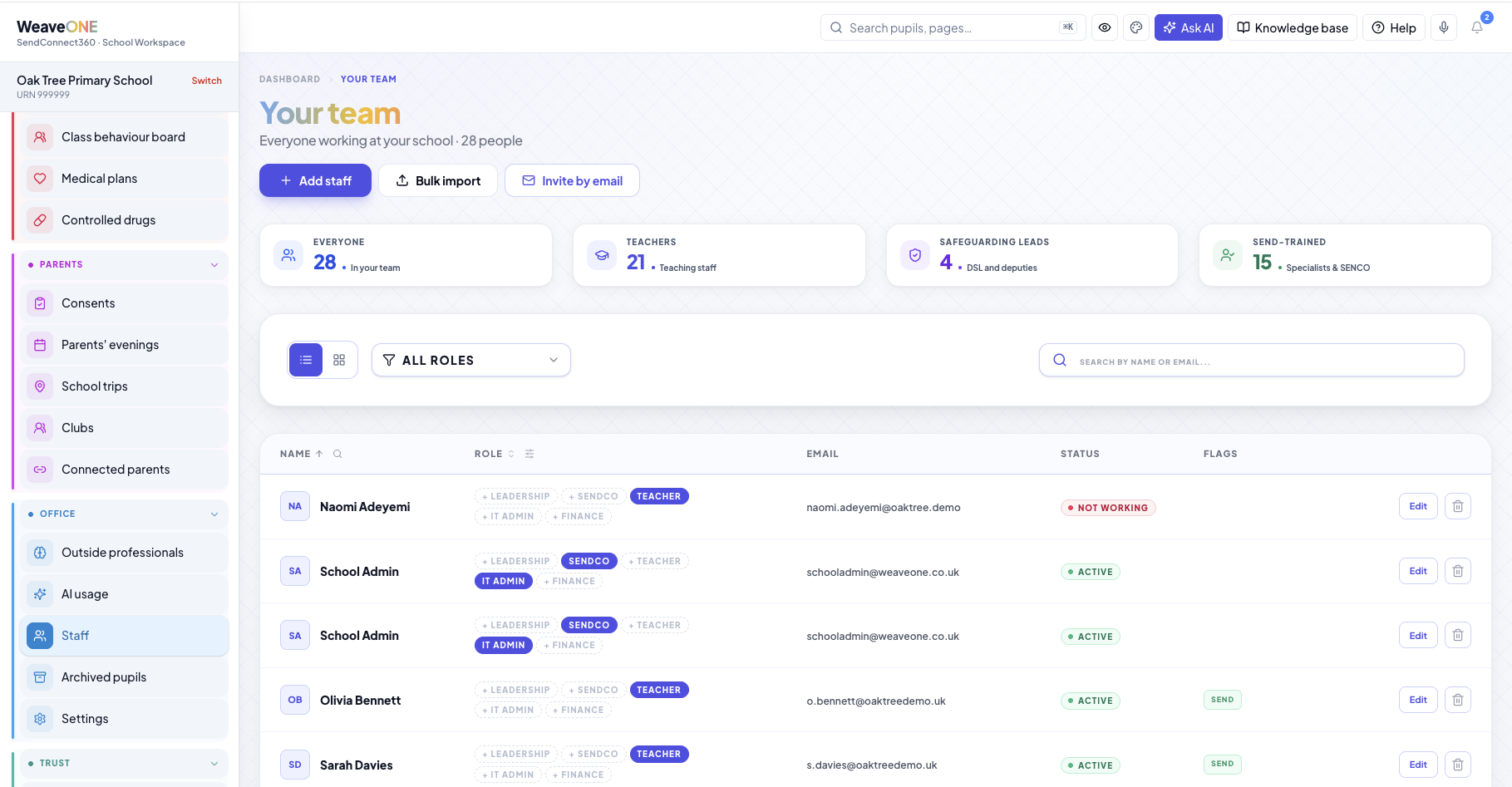
Your team, with the right access
Invite or bulk-import staff — unlimited accounts. Roles visible at a glance: teachers, SENDCO and DSL duties, SEND training. Access follows role, so a class teacher never sees what only leadership should.
The parent portal answers before parents have to ask.
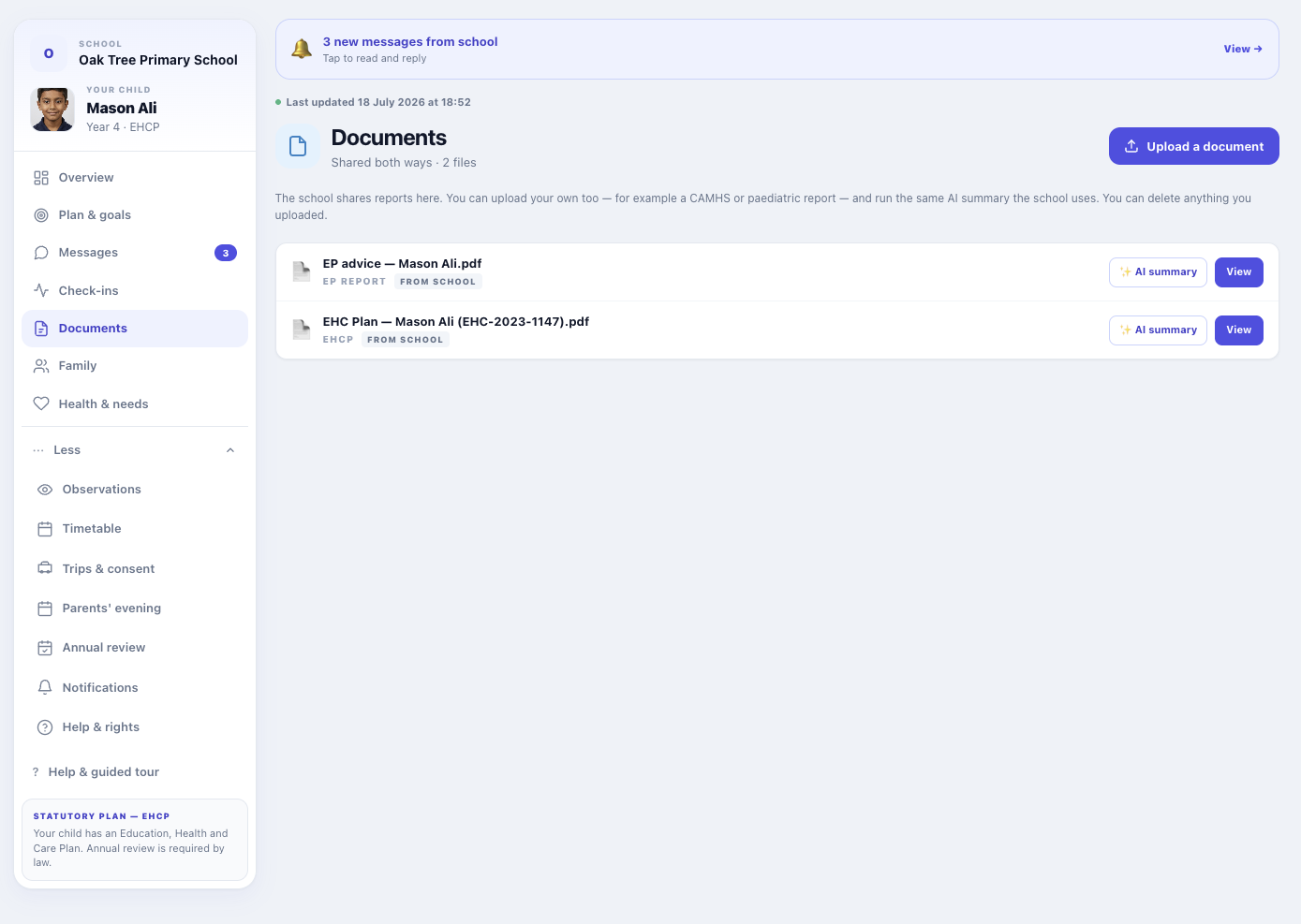
The paperwork, finally in one place parents can reach
The school shares EP advice and the EHC plan; parents upload their own CAMHS or paediatric reports back — and either side can run the same AI summary the school uses. "Can you send me a copy of…" stops being a phone call.
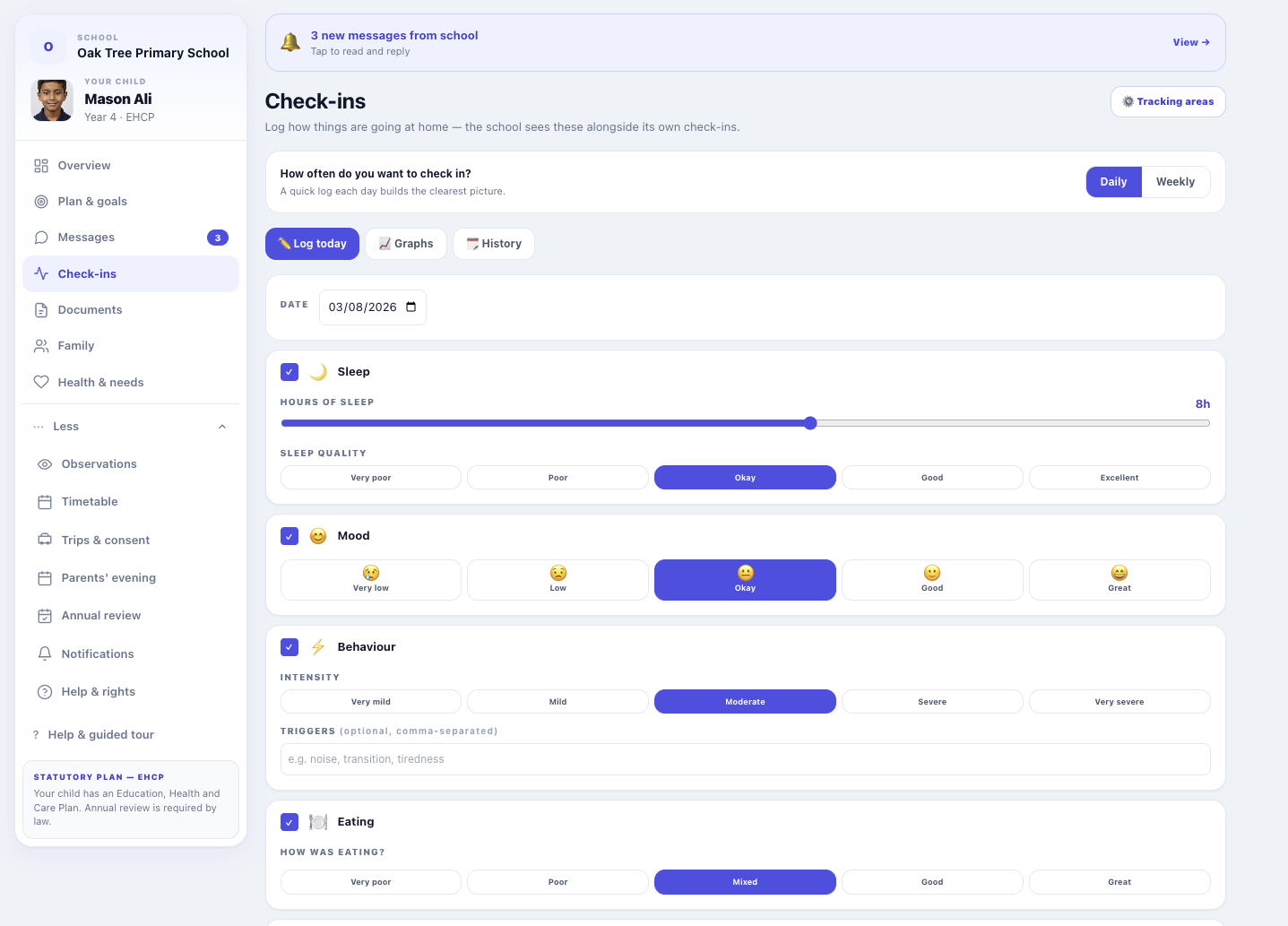
Check-ins from home, beside the school's own
Parents log sleep, mood, behaviour and eating in under a minute; the school sees it alongside its own check-ins. The "he didn't sleep" heads-up becomes a trend the SENCO can act on, not a corridor rumour.
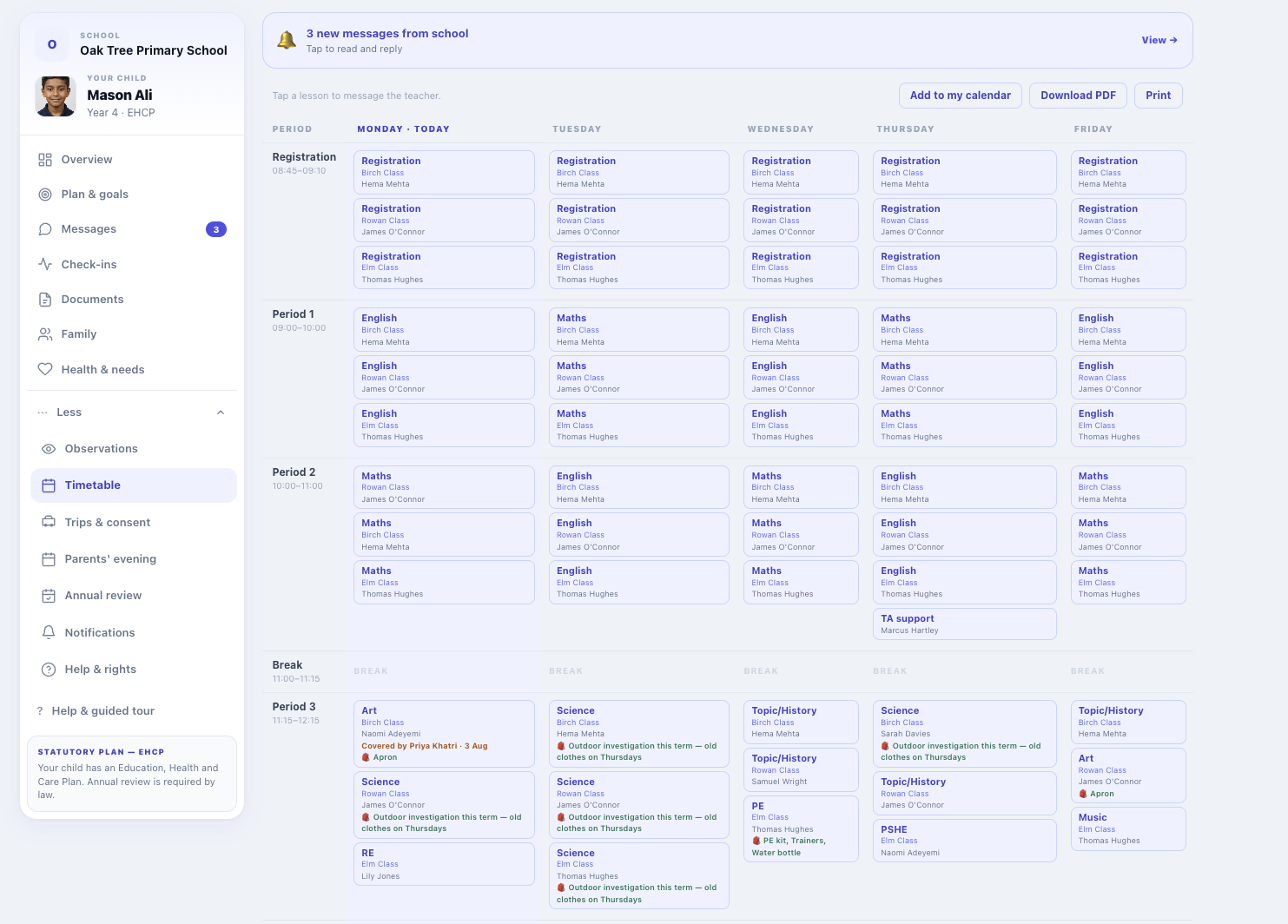
The child's own timetable — kit, cover and all
The week as the child will live it: covered lessons flagged, PE kit and old-clothes days called out, one tap to message the teacher, add to the family calendar or print for the fridge.
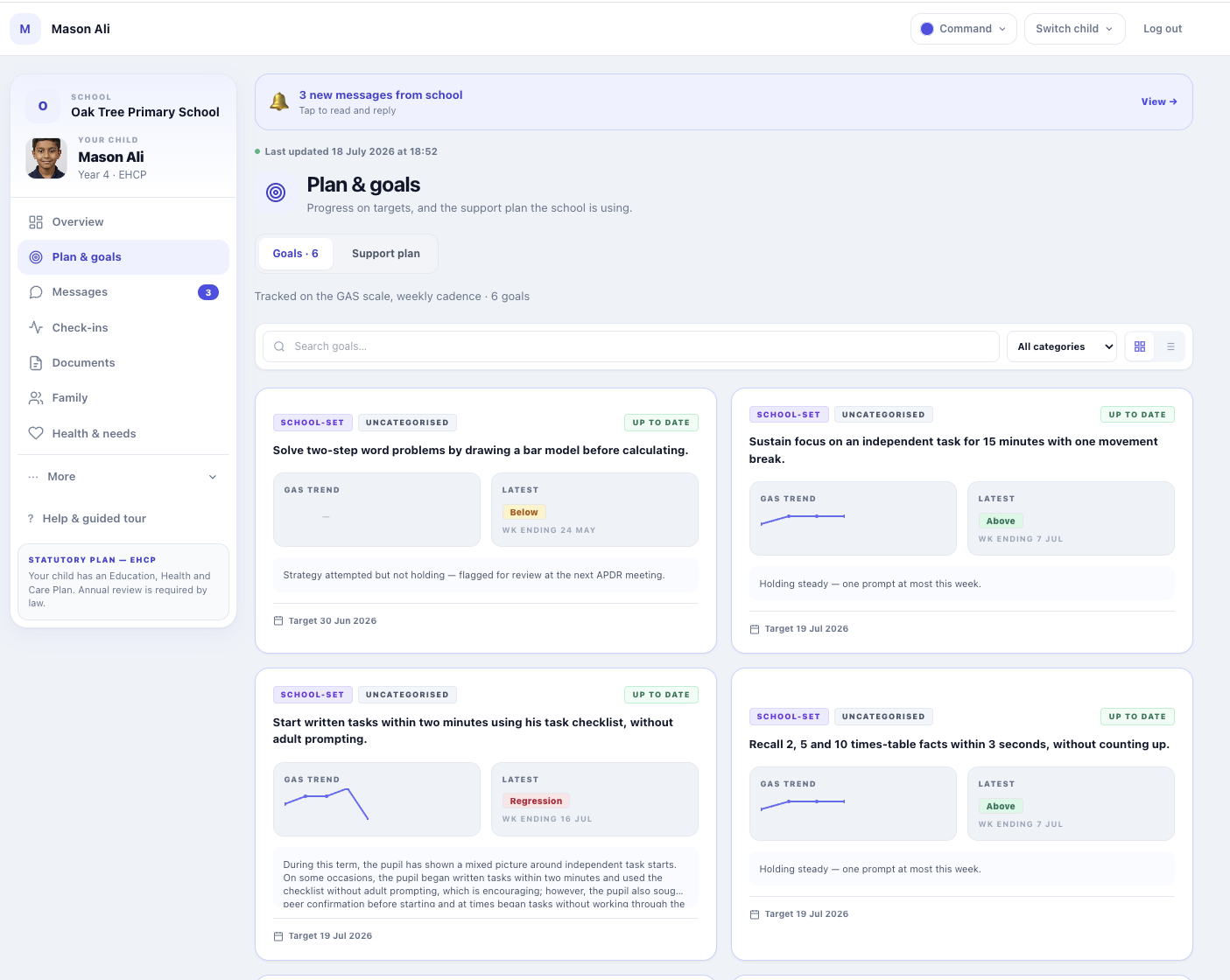
The plan and its goals, in the parents' hands
The same GAS-tracked goals the school works to — trends, latest ratings, honest notes when a strategy isn't holding. Parents stop asking "is the plan working?" because they can see for themselves.
The evidence writes itself from the day you just had.
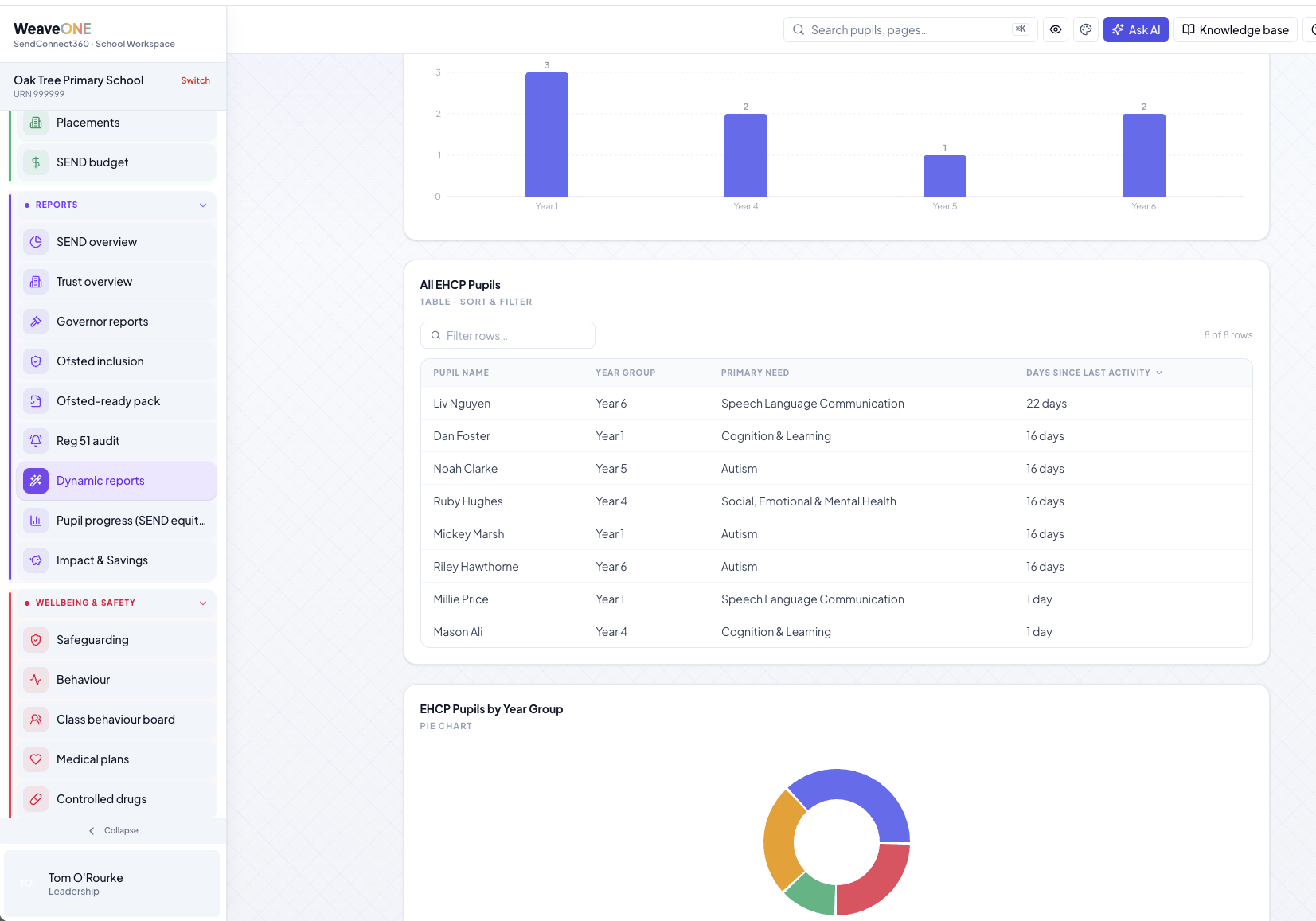
Reports that build themselves
EHCP pupils by year group, days since last activity, need categories — table, bar or pie, filtered live. When the local authority or a governor asks, the answer is a report, not a weekend.
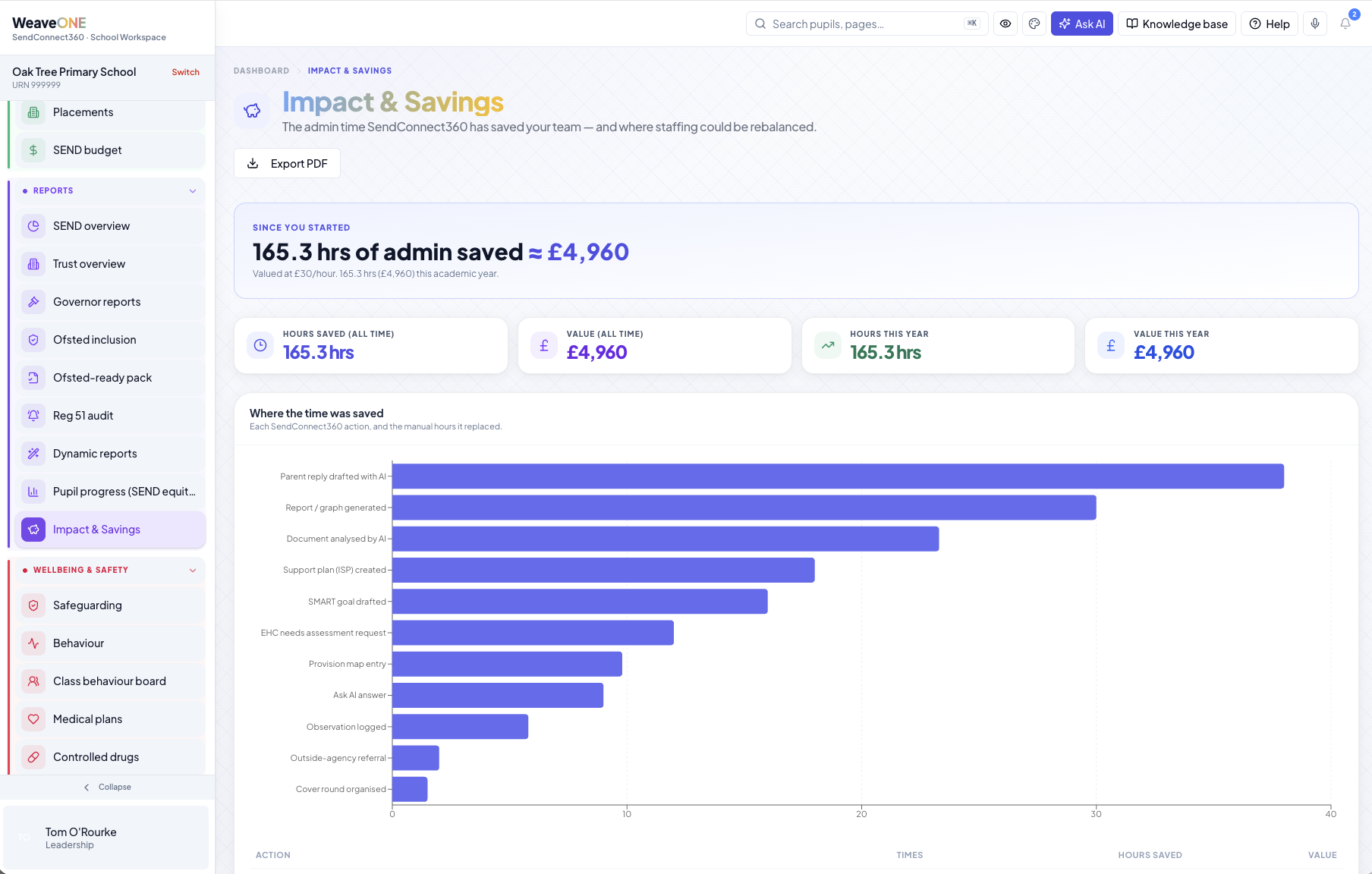
The value, measured — not claimed
Impact & Savings counts the admin the platform actually did — replies drafted, reports generated, plans created — valued at £30/hr. Export the PDF for your head or governors: the subscription argues for itself.
What the family sees in Pathway.
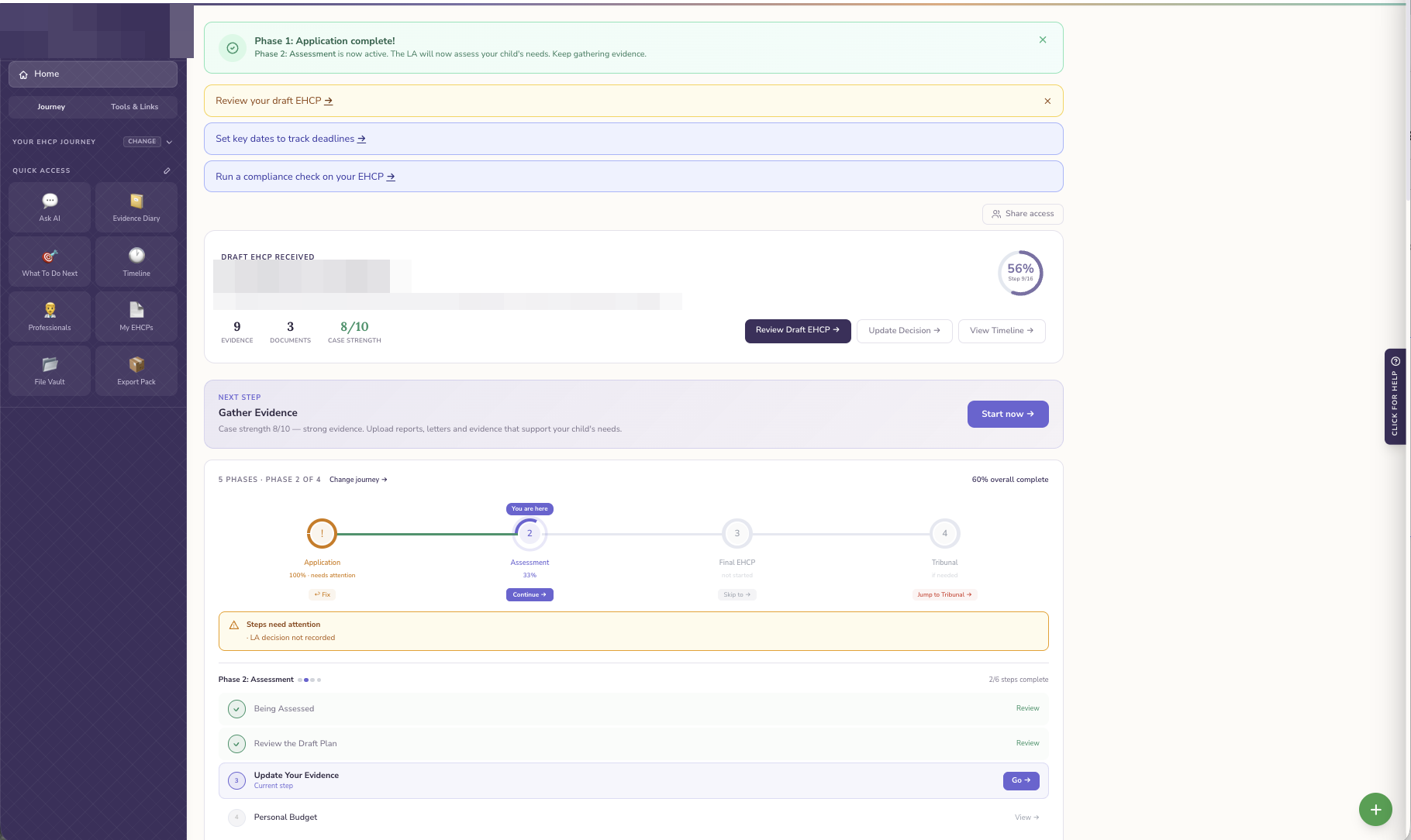
The whole EHCP journey, one dashboard
Phases from application to tribunal, the 15-working-day review window counted down, evidence and case strength at a glance, and the next step always one button away. (Family details redacted.)
The plan, versioned and health-checked
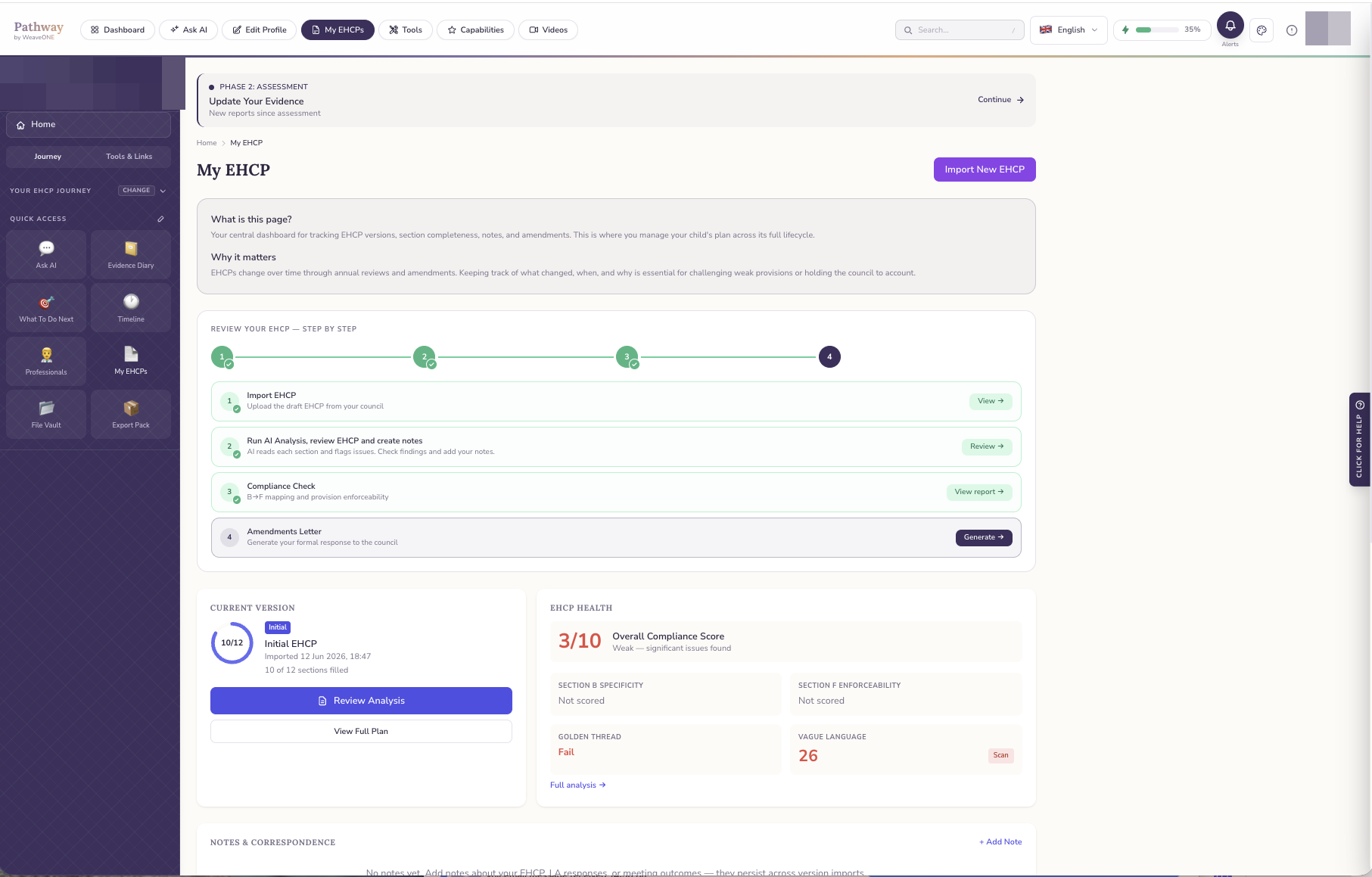
Import the council's draft and get an honest verdict: compliance 3/10, golden thread failed, 26 instances of vague language. Every version kept, so at annual review the family can prove what changed and when.
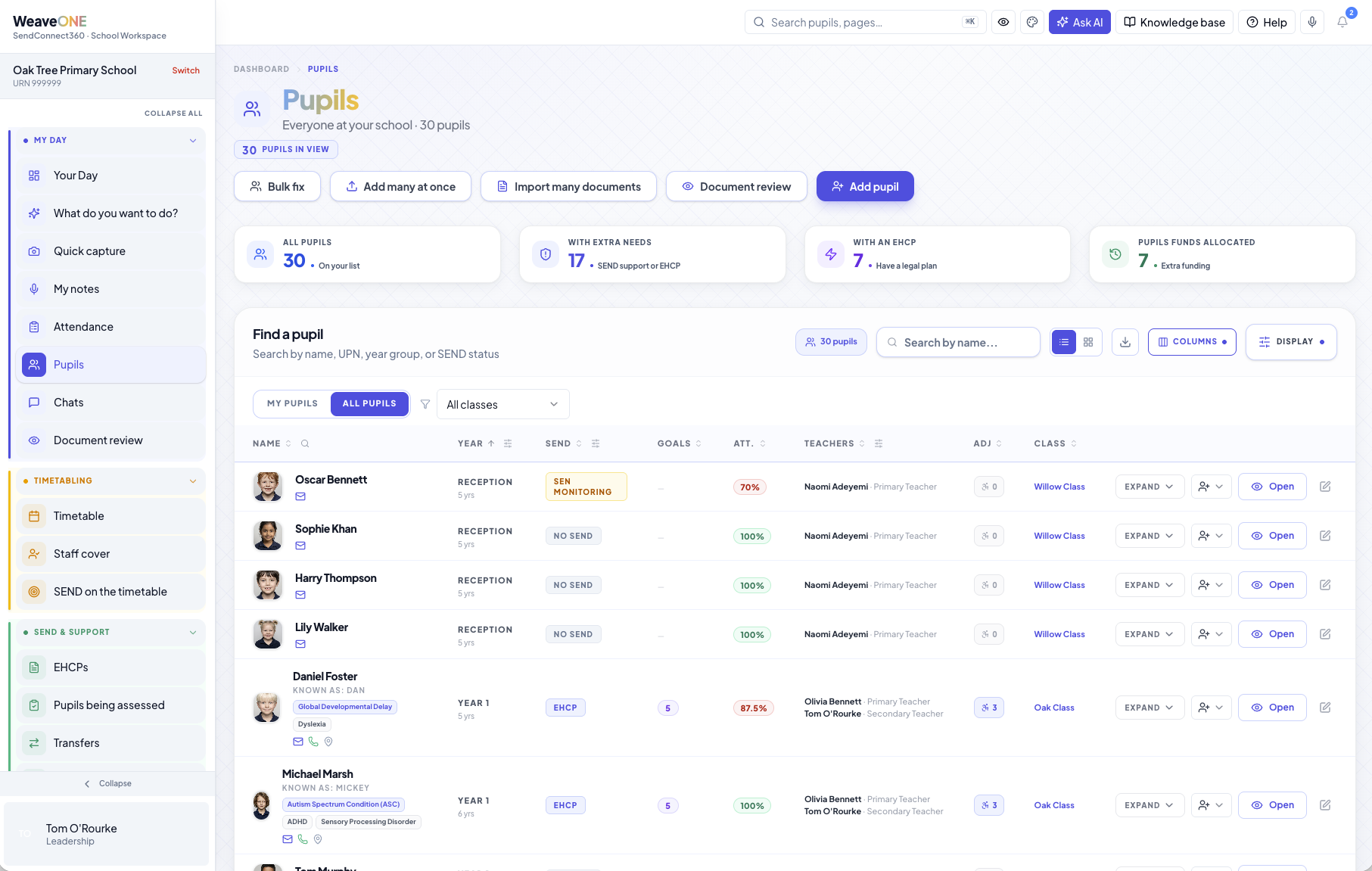
Section review that writes the response letter
AI reads all 29 pages against the legal test: 7 must-fix issues, 4 to improve, and a warning that unenforceable provision means no obligation to deliver — one click adds every issue to a formal amendments letter.